

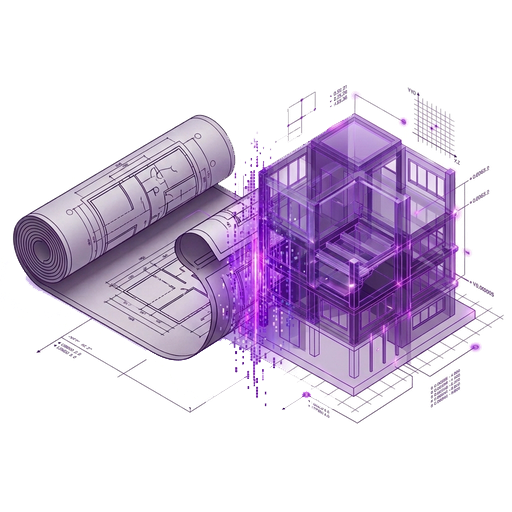
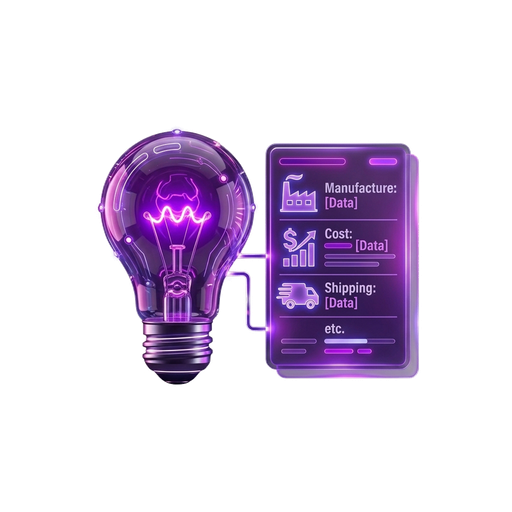


Across the global architecture and construction industry, billions of dollars are invested annually in high-fidelity 3D Building Information Models. Yet historically, over 95% of that intelligence was discarded upon substantial completion—flattened into disconnected 2D PDF drawing sheets and unindexed manuals handed over on USB thumb drives. To solve this catastrophic handover gap, the International Organization for Standardization published the ISO 19650 standard series.
What is ISO 19650?
ISO 19650 is the international standard for managing information over the whole life cycle of a built asset using Building Information Modeling (BIM). Originating from the groundbreaking British Standards (BS 1192 and PAS 1192), ISO 19650 establishes an internationally harmonized consensus framework for how data is requested, produced, validated, and stored across both capital delivery and multi-decade facility operations.
The ISO 19650 suite consists of five core parts:
- ISO 19650-1 (Concepts & Principles): Defines the fundamental vocabulary, metadata conventions, information hierarchy, and the Common Data Environment (CDE).
- ISO 19650-2 (Delivery Phase of Assets): Governs the tendering, design, coordination, and construction stages.
- ISO 19650-3 (Operational Phase of Assets): The critical standard for asset owners, facility directors, and strata corporations managing real-world physical operations.
- ISO 19650-4 (Information Exchange): Formalizes the verification, testing, and validation of data transfers (using open schemas like IFC).
- ISO 19650-5 (Security-Minded Approach): Establishes cyber-security, data sovereignty, and threat mitigation protocols for digital built environment records.
The Information Hierarchy: OIR to AIM
The core brilliance of ISO 19650 lies in its structured information requirements hierarchy. Rather than allowing consultants to produce generic data, information generation is strictly driven by the owner’s operational objectives:
The Four-Tier Requirements Structure
- OIR (Organizational Information Requirements): High-level business and fiduciary goals (e.g., "The strata corporation must achieve compliance with BC SPA s.94 and minimize water damage insurance deductibles").
- AIR (Asset Information Requirements): Specific technical data required for operations (e.g., "Every boiler and isolation valve must have unique alphanumeric IDs, install dates, maintenance cycles, and spatial coordinates").
- PIR & EIR (Project & Exchange Information Requirements): Explicit instructions delivered to contractors specifying file formats, Level of Information Need, and exchange deadlines.
- AIM (Asset Information Model): The single source of truth containing geometry, documentation, and operational data used throughout the 30-to-50-year operational life of the asset.

The Common Data Environment (CDE)
ISO 19650 mandates that all project and asset information reside within a single Common Data Environment (CDE) governed by strict workflow states:
- Work in Progress (WIP): Unapproved working files created by individual trades or specialists.
- Shared: Peer-reviewed information shared across engineering disciplines for coordination and clash detection.
- Published: Formally verified, sealed, and approved documents authorized for statutory or operational use.
- Archived: Permanent, auditable historical records preserving every version, change-order, and engineering sign-off.

Why ISO 19650-3 is Critical for BC Strata Corporations
In traditional multi-family housing, strata councils operate without an Information Management framework. When a pump leaks or an elevator fails, councils possess no verified Asset Information Model. Contractors arrive on-site blind, resulting in billable hours spent searching for isolation valves and contradictory maintenance logs.
Applying ISO 19650-3 operational principles transforms strata governance:
- Elimination of Data Fragmentation: All warranties, operating permits, single-line diagrams, and maintenance logs are linked to an auditable Asset Information Model (AIM).
- Compliance with SPA s.35: Fulfills statutory record retention requirements by preserving complete digital audit trails that cannot be lost during property management transitions.
- Predictable 30-Year Lifecycle Modeling: Feeds clean, structured component metrics directly into statutory Depreciation Reports (SPA s.94) and Electrical Planning Reports (SPA s.94.1).
How Tucker Technology Consulting Implements ISO 19650
Tucker Technology Consulting provides executive advisory and turnkey execution aligning multi-family residential towers and institutional infrastructure with ISO 19650 standards. We construct the operational Asset Information Model (AIM), implement secure cloud Common Data Environments, and guarantee that built asset intelligence remains an active, value-generating tool for decades.
International Standards & Guidance References
Consult the official international standards, regional guidance frameworks, and technical implementation portals below:
- International Organization for Standardization: ISO 19650-1:2018 & ISO 19650-3:2020 ↗ Official global standards governing operational information management and Asset Information Models (AIM).
- UK BIM Framework: Practical Guidance on ISO 19650 ↗ Comprehensive, open-access industry guidance explaining the real-world deployment of OIR, AIR, and CDE workflows.
- buildingSMART International: ISO 19650 Open Standards Integration ↗ Global technical body aligning openBIM and IFC data schemas with ISO 19650 lifecycle handover protocols.
- Canadian Construction Association (CCA) - Canadian BIM Guidelines ↗ National standards and contract guidelines supporting information management across Canadian infrastructure.
- BIM BC Alliance Open Letter ↗ Advocating for provincial adoption of ISO 19650 information governance across British Columbia public and private assets.