Applying institutional-grade spatial technology to preserve 3,000 years of Etruscan, Roman, and Medieval architectural heritage in Volterra, Italy—and transforming billions of scan points into an interactive, real-time historical simulation game.
Watch the official mini-documentary exploring the international reality capture expedition in Volterra, Italy. Formally produced by YouTube, Case Technologies, and Autodesk Building Solutions.
Perched atop a rugged windswept ridge in Tuscany, the ancient city of Volterra is one of the most historically continuous settlements in human civilization. For over three millennia, Etruscan bronze masters, Roman engineers, medieval stonemasons, and Renaissance architects built atop one another's foundations.
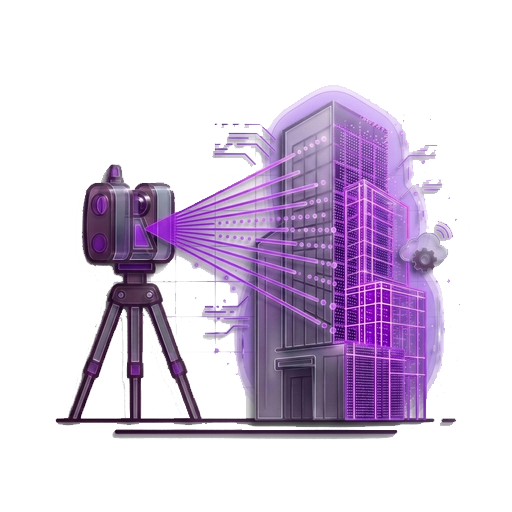
However, this invaluable heritage faces acute existential threats: geological cliff subsidence (Le Balze), seismic activity, moisture intrusion, and atmospheric pollution. Brey Tucker has dedicated extensive volunteer service working with the Volterra-Detroit Foundation, deploying high-density terrestrial laser scanners (LiDAR) and calibrated drone photogrammetry alongside partners like Case Technologies to create millimeter-accurate digital records of ancient sites before time erodes them forever.
Survey-grade LiDAR and photogrammetry provided the foundational geometry to digitally resurrect the Roman Theatre of Volterra to its original 1st-century BC glory:
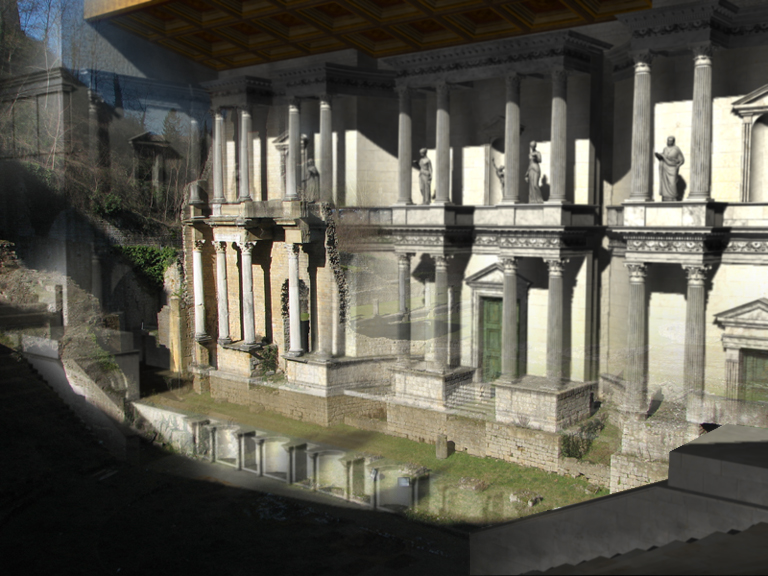
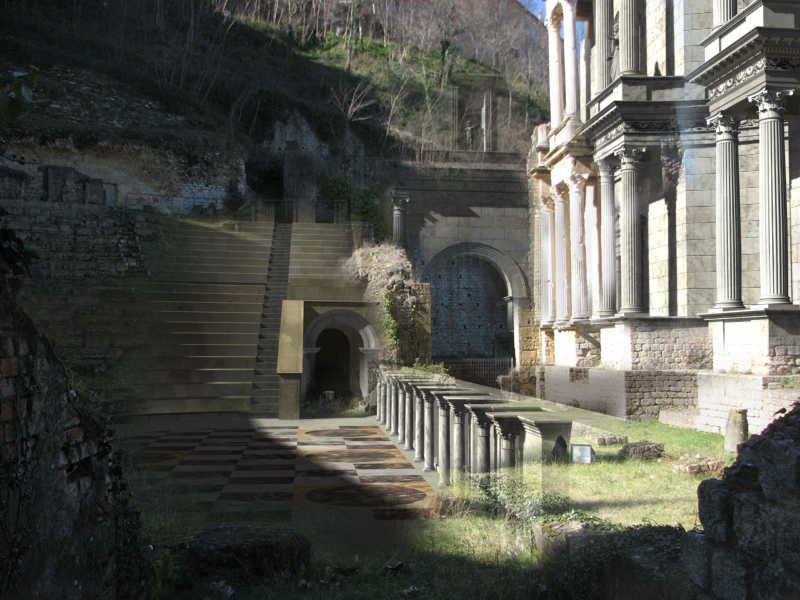
COMPOSITE OVERLAY
Geometric composite matching the 2020s excavated stone seating (cavea) with the restored polychrome Corinthian marble stage (scaenae frons).
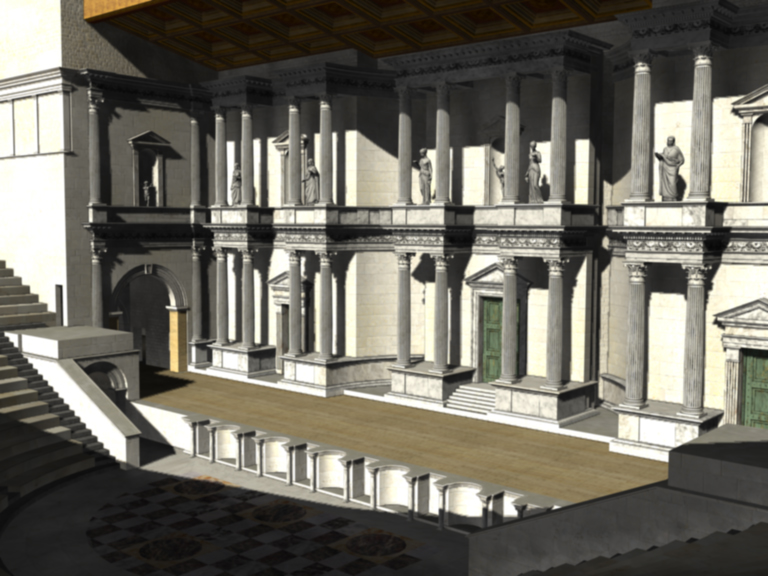
RECONSTRUCTED (10 BC)
Fully rendered classical architectural model showing the grand multi-tiered colonnades, statues, and decorative friezes commissioned by the Caecina family.
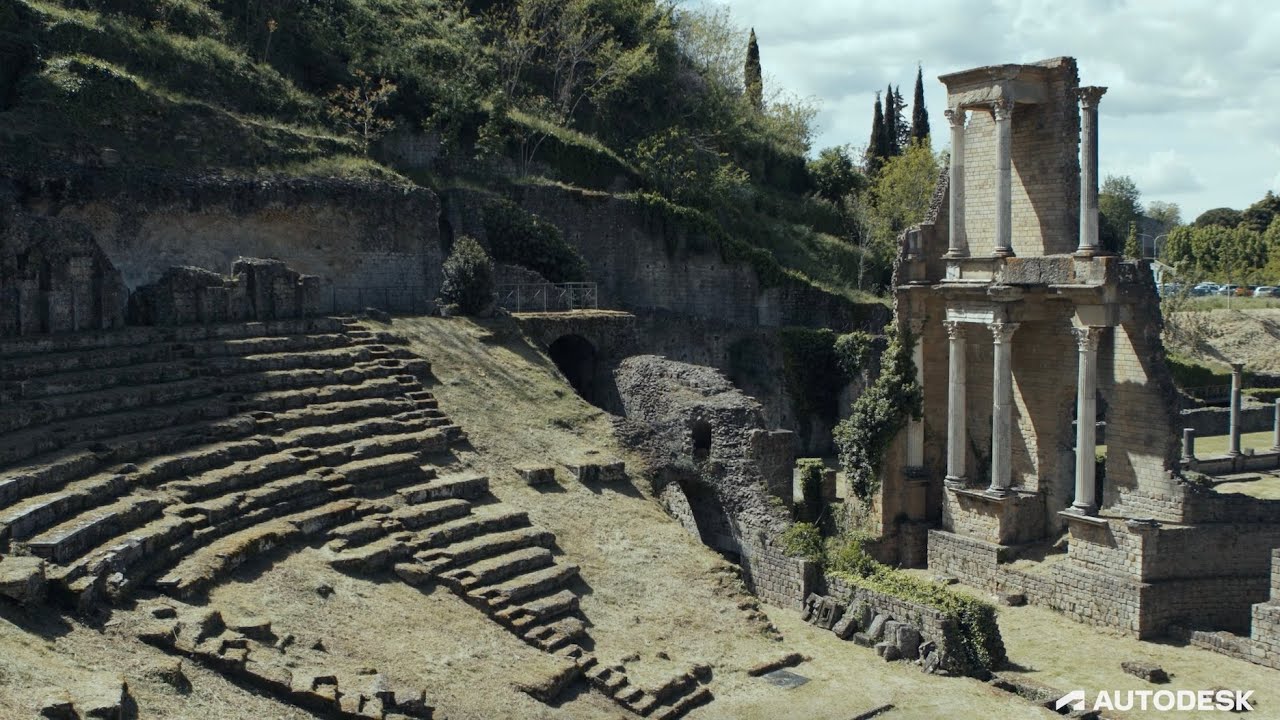
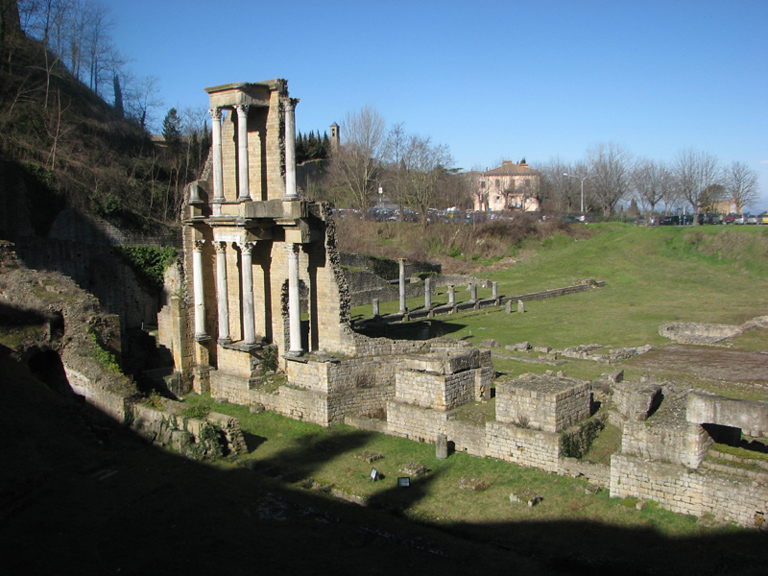
EXISTING RUINS (2020s)
The present-day archaeological state, un-earthed in the 1950s by Enrico Fiumi. Terrestrial laser scanning captured every fractured stone block.
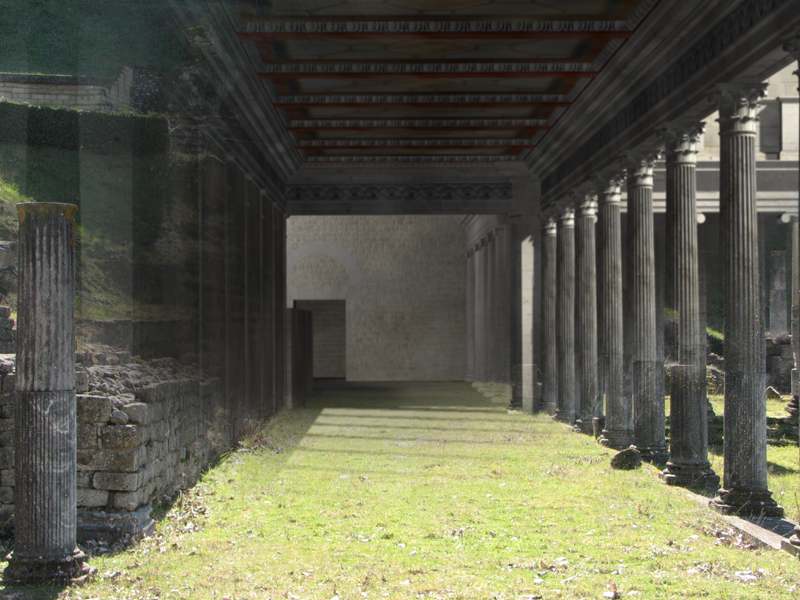
PORTICO COMPOSITE
Reconstruction of the covered quadriporticus behind the stage building where spectators sheltered during rain, aligned to remaining pillar footings.
ORCHESTRA PERSPECTIVE
Panoramic perspective from the highest spectator tiers looking down through the semi-circular orchestra toward the Tuscan valley horizon.
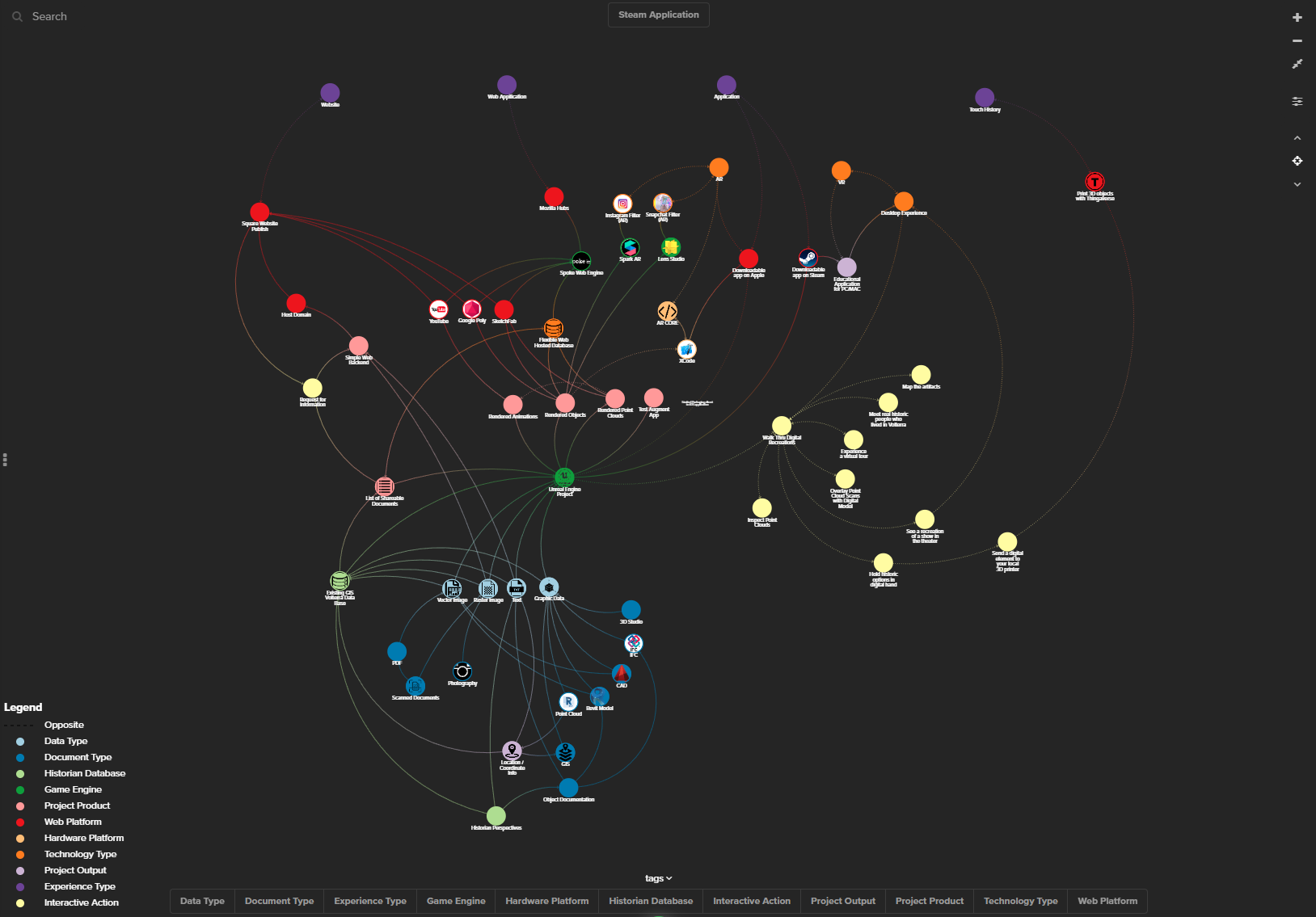
SYSTEMS ARCHITECTURE
The Kumu systems map illustrating the interconnected research initiatives, reality capture datasets, academic partners, and preservation workflows.
Capturing laser point clouds is only half the mission. If spatial data remains locked in specialized engineering CAD formats, it cannot inspire the public or educate students.
As part of his ongoing volunteer commitment, Brey Tucker is actively building an interactive real-time historical simulation game in Unreal Engine 5 entitled "VolterraInTime". This project bridges reality-capture laser scans and photogrammetry directly into an open, explorable 3D world powered by Epic Games' next-generation graphics engine.
The game blends archaeological precision with video game interactivity to make ancient history tangible:
Players can seamlessly scrub time backwards from the present-day 2020s archaeological ruins to the year 10 BC, watching the Roman Theatre digitally reconstruct itself into full polychrome marble splendor in real time.
Inspect museum-scanned Etruscan alabaster urns, Roman coins, and bronze votive statues. Rotate objects under custom lighting, view archaeological metadata, and read translated Latin inscriptions.
Experience the authentic acoustics of the ancient theatre cavea. Unreal Engine 5 calculates sound propagation, reproducing the voice of a Roman actor performing from the orchestra.
Explore the extensive primary media archive maintained on Google Drive, housing point cloud files, aerial drone sweeps, and Unreal Engine gameplay clips:
Contains high-resolution video renders, Unreal Engine 5 project files (VolterraInTime), reality capture point clouds (Autodesk ReCap), drone footage, and historical research data compiled across multiple international workshops.
Autodesk Gold Partner specializing in advanced 3D laser scanning, Reality Capture, and BIM/VDC solutions supporting cultural preservation and built asset excellence.