


While Section 94 of the Strata Property Act establishes the legal obligation to hold a depreciation report, the technical blueprint for what constitutes an acceptable study is codified in Section 6.2 of the Strata Property Regulation (SPR). Regulation 6.2 dictates exactly what building components must be inventoried, how 30-year lifecycle financial models must be calculated, and who holds legal authority under provincial law to certify and seal the final document.
The Anatomy of SPR 6.2: The Three Mandatory Pillars
Under British Columbia law, a valid statutory depreciation report must satisfy three distinct sections within Regulation 6.2:
1. SPR 6.2(2): The Physical Inspection Requirement
The regulation explicitly mandates an on-site physical inspection of the strata corporation's common property, limited common property, and common assets. A purely financial spreadsheet or desktop statistical analysis prepared without comprehensive physical site verification is legally invalid under BC law.
2. SPR 6.2(3): The Comprehensive Component Inventory
Pursuant to SPR 6.2(3), the report author must establish an exhaustive inventory of all physical components whose repair or replacement is funded through the Contingency Reserve Fund (CRF). The regulation specifies mandatory component classifications:
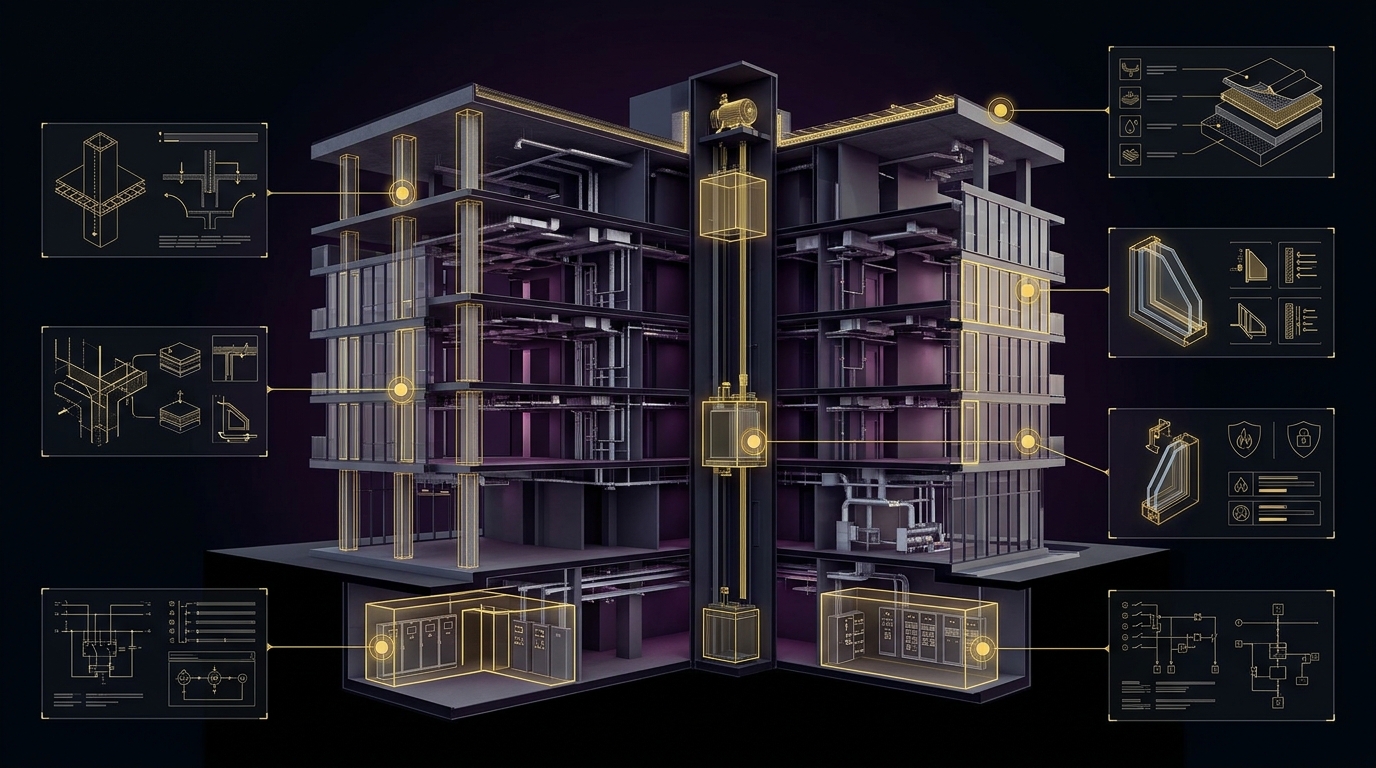
- Building Envelope: Exterior wall cladding, curtain wall glazing, rainscreen assemblies, windows, exterior doors, caulking, flashing, decks, balconies, and complete roofing systems (SBS membrane, metal, or asphalt shingles).
- Structural Systems: Concrete foundations, suspended slabs, structural columns, steel transfer beams, and retaining walls.
- Mechanical & Plumbing Infrastructure: Domestic hot water boilers, hydronic heating loops, chillers, cooling towers, ventilation fans, sanitary sewer piping, water supply risers, backflow preventers, and sump pumps.
- Electrical & Distribution: Main switchgear, step-down transformers, distribution panels, emergency generators, life-safety transfer switches, and exterior site lighting.
- Life Safety & Fire Protection: Fire alarm control panels (FACP), annunciators, sprinkler heads, standpipe valves, fire pumps, and smoke evacuation dampers.
- Conveyance Systems: Traction and hydraulic elevators, door operators, hoist ropes, controllers, and ADA accessibility lifts.
- Interior Finishes & Amenities: Lobby finishes, common corridor carpets, exercise facilities, swimming pools, sauna heaters, and guest suites.
- Grounds & Exterior Common Assets: Underground parking pavement, traffic membranes, security gates, perimeter fencing, and shared irrigation.
The Statutory 30-Year Horizon
For every inventoried component, SPR 6.2(3) requires the author to state: (a) its expected nominal lifespan, (b) estimated remaining service life, (c) estimated current replacement cost, and (d) recommended maintenance and reserve funding schedules projected across a minimum window of 30 years.
The Qualified Persons Mandate: SPR 6.2(6)
A frequent point of confusion among volunteer strata councils is who may legally prepare and seal a statutory depreciation report. Under SPR 6.2(6), the report must be authored by a "qualified person" possessing:
- Expert knowledge of multi-family buildings and component life-cycle operations.
- Direct knowledge of technical depreciation calculation methodologies and local construction inflation metrics.
- Professional accreditation and errors & omissions liability insurance. Recognized professional designations include:
- Licensed Professional Engineers (P.Eng) registered with Engineers and Geoscientists BC (EGBC).
- Registered Architects (AIBC) registered with the Architectural Institute of British Columbia.
- Certified Reserve Planners (CRP) certified by the Real Estate Institute of Canada (REIC).
- Professional Quantity Surveyors (PQS) registered with the Canadian Institute of Quantity Surveyors (CIQS).
The Division of Labor: Why TTC Partners With Licensed Engineers
Tucker Technology Consulting operates with strict regulatory transparency. TTC does not replace licensed structural or mechanical engineers; instead, we provide the spatial reality capture and parametric 3D BIM foundation that licensed engineers rely upon:
| Scope Responsibility | Tucker Technology Consulting (TTC) | Certifying Professional Engineer (P.Eng) |
|---|---|---|
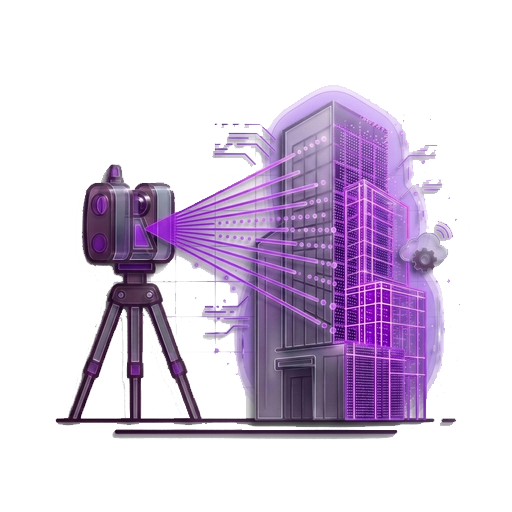
| Spatial Reality Capture | Drone photogrammetry, high-rise envelope scans, mobile SLAM LiDAR of parkades and mechanical penthouses. | Reviews spatial scans and verifies physical condition without hazardous swing-stage rigging. |
| Alphanumeric Component Registry | Assigns unique 3D spatial asset tags to every pump, valve, boiler, and roof zone with embedded metadata. | Audits component lifespan assumptions and applies engineering deterioration models. |
| Statutory Sign-off | Delivers audit-ready digital twin repositories and structured Carta-style spatial ledgers. | Calculates the 30-year cash flow projections and signs and seals the statutory report under SPR 6.2(6). |
| Ongoing Asset Stewardship | Maintains the living digital twin, integrating real-time IoT moisture sensing and warranty tracking. | Performs frictionless Year 5 statutory renewals using the existing, auditable spatial model. |

Zero Referral Commissions: Our Fiduciary Commitment (G9 Compliance)
In traditional strata consulting, engineering firms routinely pay property management companies or third-party brokers "referral fees" or kickbacks ranging from 10% to 25% of the contract value.
Tucker Technology Consulting operates strictly without referral commissions pursuant to Real Estate Services Rules and the BC Financial Services Authority (BCFSA) G9 regulatory standard. Strata councils can be certain that every dollar invested in their digital twin goes directly into physical reality capture and long-term asset data.
Statutory & Official BC Law References
Consult the official British Columbia statutes, administrative regulations, and professional regulatory bodies below:
- BC Laws: Strata Property Regulation, B.C. Reg. 43/2000, Section 6.2 ↗ Official statutory text specifying component inventories, 30-year financial schedules, and qualified person rules under 6.2(6).
- BC Laws: Strata Property Act [SBC 1998] c. 43, Section 94 ↗ The overarching governing statute establishing mandatory 5-year depreciation report obligations.
- Engineers and Geoscientists British Columbia (EGBC) Joint Practice Guidelines ↗ Professional engineering standards for preparing, conducting, and certifying strata depreciation reports in BC.
- Architectural Institute of British Columbia (AIBC) ↗ Provincial regulatory body for architects providing building envelope condition evaluations and depreciation report certification.
- Real Estate Institute of Canada (REIC) - Certified Reserve Planner (CRP) ↗ Professional national accreditation standards for certified reserve fund planners in Canada.
- BC Financial Services Authority (BCFSA) - Strata Governance & Real Estate Rules ↗ Regulatory guidelines prohibiting undisclosed referral commissions and establishing transparency standards for strata managers.