



Why Every Boiler, Elevator, and Roof Membrane Needs a "Nutrition Facts" Label
You don't need a food science degree to read a grocery carton—because Health Canada’s Nutrition Facts table ↗ standardized typography, rules, and daily benchmarks across the country. Here is how we apply that exact visual discipline to every tracked building element under BC SPR 6.2.
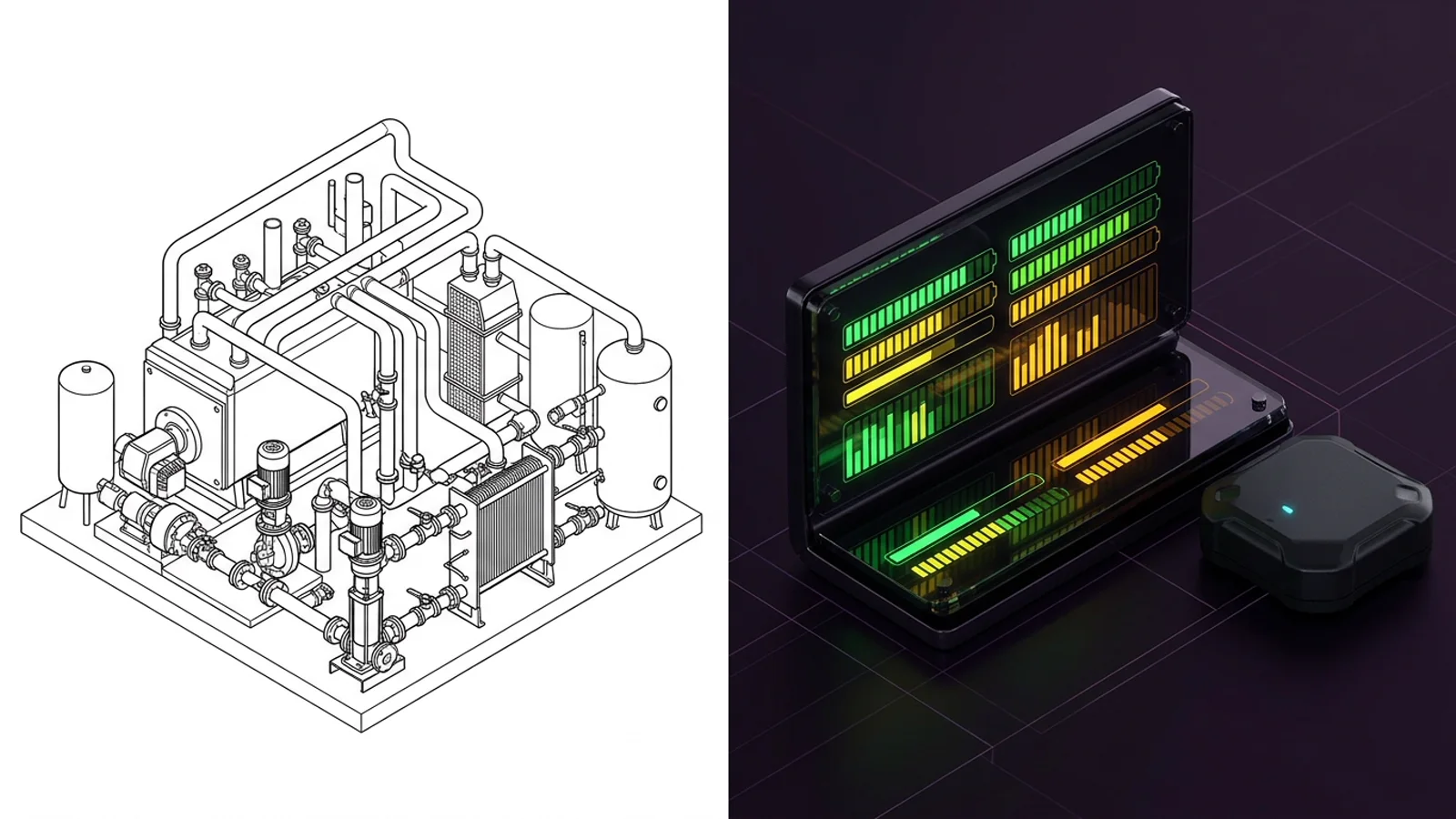
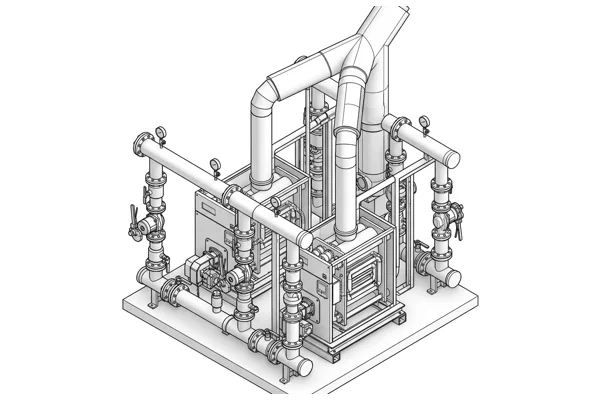
Primary DHW Condensing Boiler #1
#LR-P1-04 (Online)
Ask seven volunteer strata council members to read a 200-page PDF depreciation report or open an enterprise 3D BIM model, and at least five of them will tune out within ten minutes. Yet every single one of those council members can pick up a carton of milk or a box of cereal in a grocery aisle and evaluate its nutritional profile in under five seconds. Why? Because Health Canada’s Nutrition Facts table ↗ is one of the most successful public information design systems ever engineered.
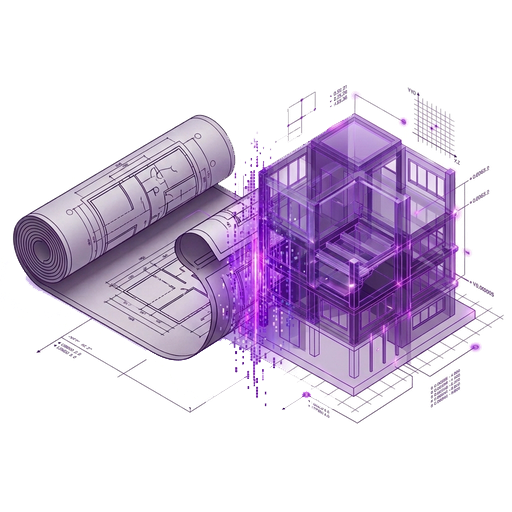
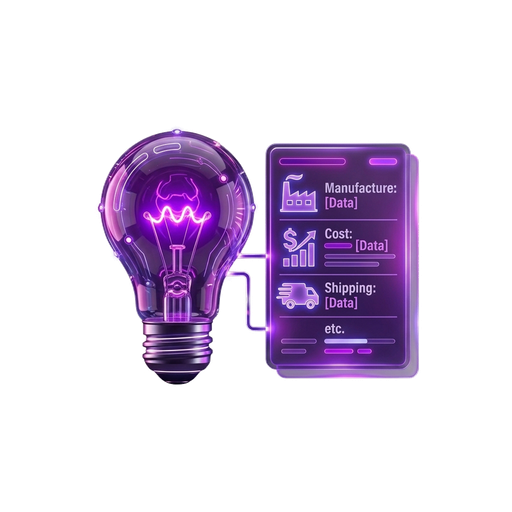
At Tucker Technology Consulting (TTC), we asked a foundational question: What if every physical system in a British Columbia strata building—every boiler, elevator drive, roof membrane, PRV station, and electrical transformer—carried a standardized "Nutrition Facts" label backed by ISO 19650 object-level metadata and real-time IoT telemetry?
1. Five Design Lessons Borrowed Directly From Health Canada
When Health Canada mandated the standardized Nutrition Facts table under the Food and Drug Regulations, public health researchers solved the exact cognitive problem that plagues strata governance today: how to help non-specialists make high-stakes decisions quickly without drowning in raw technical data.
By studying Health Canada’s official Nutrition Labelling specification ↗, we adapted five core information-architecture principles directly into our Object Health Labels and Overarching Building Treasury Health Label:
- High-Contrast Boxed Framing & Heavy Rule Dividers: Health Canada uses a stark black border on a pure white surface with thick (`8px`) and medium (`4px`) horizontal rules to separate major conceptual zones. In our Object Health Labels, thick bars cleanly separate ISO 19650 Asset Identity & LOD 300 BIM Geometry from Lifecycle Condition, Total Cost of Ownership (TCO), Replacement Quote Verification, and Live IoT Telemetry.
-
Serving Size $\rightarrow$ ISO 19650 System, Family Type & COBie GUID:
Every Nutrition Facts table begins with a specific serving size so the reader knows the exact unit being measured. On a building Object Health Label, the header establishes the component’s unambiguous identity using ISO 19650 / Uniclass 2015 system classification (e.g.,
Ss_55_30_38 · Domestic Hot Water), its openBIM IFC4 Asset Family Type (IfcBoilerType), an immutable COBie GUID (`3f2a89d1-0045-42a1-b4ec-98124508eef1`), and a black-and-white LOD 300 Revit BIM isometric thumbnail so council members can visually recognize the exact piece of machinery in the mechanical room. -
Calories $\rightarrow$ Overall Object Health Grade (`F` to `A+` / 100 Pts):
Just as "Calories" provides the immediate headline number at the top of a food label, our upper-right badge displays a composite letter grade from
FtoA+(`0–100 points`). A Strata Treasurer or home buyer reviewing a Form B disclosure immediately spots whether an elevator is aGrade A (92/100)asset or aGrade C- (58/100)liability. - Sub-Indented Nutrient Breakdowns $\rightarrow$ Total Cost of Ownership (TCO): Health Canada indents Saturated and Trans fats beneath Total Fat so consumers see what drives the total. Traditional depreciation reports only show one number—capital replacement cost—while ignoring the operating fund bleeding happening every month. Our label indents Scheduled Preventive Maintenance, Unscheduled Reactive Call-Outs (3-Yr Avg), and Annual Gas/Electrical Draw beneath Annual Operating & Upkeep Cost, culminating in a true Lifecycle Total Cost of Ownership (TCO).
- % Daily Value (`% DV`) Footnote $\rightarrow$ Quote Certainty & Treasury Solvency Benchmarks: Health Canada’s *"5% or less is a little, 15% or more is a lot"* rule gives instant context to raw grams and milligrams. On our labels, right-hand benchmark columns show % of Useful Life Consumed, CRF Funding Ratio (%), and whether the replacement cost is backed by a Verified Contractor Quote (`✓ QUOTED`) or hit with our `-25 pt` Unquoted Price-Risk Penalty.

2. How the `F` to `A+` (100-Point) Scoring System Works
A letter grade is only trustworthy if the math behind it is transparent, objective, and auditable by both your certifying Depreciation Report engineer (SPR s.6.2(6)) and your Strata Treasurer. Every individual Object Health Score (`0–100 points`) is calculated across four weighted pillars:
| Scoring Pillar | Max Points | What It Measures & Why It Matters to the Strata | Scoring Deduction / Penalty Rules |
|---|---|---|---|
| 1. Physical Condition & Remaining Useful Life (RUL) | 30 pts | Inspector empirical condition score (`1–5` scale) combined with remaining service life (`RUL ÷ Expected Service Life`). | 30 pts for Grade 5 (Excellent) with >50% RUL; scales down to 0–8 pts when RUL <10% or physical failure is imminent. |
| 2. Replacement Price Certainty & Quote Verification | 25 pts | Whether the reserve study’s estimated replacement cost is backed by an actual, current contractor quote on file. | The `-25 pt` Unquoted Risk Rule: Current vendor quote (<18 mos) = 25 pts. Stale quote (18–36 mos) = 15 pts. Class-C textbook estimate only (with <5 yrs RUL) = 0 pts (-25 pt penalty). |
| 3. Maintenance & TCO Efficiency | 25 pts | Ratio of scheduled preventive maintenance vs. unscheduled emergency call-out invoices and utility consumption drift over 3 years. | 25 pts when emergency call-outs are $0/yr; loses 10–20 pts when overtime break-fix invoices exceed preventive contract costs. |
| 4. Inspection Recency & Live IoT Telemetry | 20 pts | Recency of documented professional inspection (`COBie.Issue`) plus active 24/7 LoRaWAN sensor monitoring (moisture, pressure, current, temperature). | 10 pts for documented inspection within 12 months + 10 pts for active online telemetry with zero unresolved threshold alerts. |
Why We Penalize Unquoted Replacement Costs by 25 Points
In British Columbia, post-2020 construction inflation has routinely caused generic reserve-study cost tables to lag real trade pricing by 30% to 65%. When a strata corporation believes an elevator modernization will cost $180,000 based on a stale PDF table—and has no vendor quote on file as the asset enters its final 36 months of life—that pricing blind spot is a direct special-levy risk. Automatically deducting 25 points (dropping an otherwise "B+" asset down to a C-) gives the Strata Treasurer and Property Manager an unmistakable visual mandate: procure two contractor quotes before the next AGM to restore the asset’s grade to B+/A-.
The Overarching Building Treasury & TCO Health Label
Individual components do not exist in a vacuum. When a Strata Treasurer prepares the annual budget or evaluates Contingency Reserve Fund (CRF) contributions, they need to see the entire building as a single financial organism. Our Overarching Strata Treasury & TCO Health Label rolls all 40 to 60 tracked SPR s.6.2 systems into a weighted 100-point portfolio scorecard:
- Weighted Component Health Roll-Up (`40 pts`): Every individual Object Health Score weighted by its current replacement cost, so a $450,000 roof membrane or $265,000 elevator carries proportional weight compared to a $4,500 sump pump.
- CRF Funding & Cash-Flow Solvency (`25 pts`): Current Reserve Balance divided by 5-Year Statutory Capital Demand, penalizing any unbudgeted 60-month special-levy gap.
- Portfolio Quote Coverage Ratio (`20 pts`): Percentage of capital replacement dollars due within the next 60 months that are backed by real contractor quotes rather than rough inflation estimates.
- Active Telemetry & Preventive Upkeep Shield (`15 pts`): Percentage of high-consequence water, boiler, and electrical systems protected by live non-invasive IoT sensors and active preventive service contracts.
3. Leaving Email Chains Behind: How Issue Tracking Creates a "Living Story" for Every Object
Here is the dirty secret of how building performance information is managed in 95% of residential stratas today: it dies inside disconnected email threads, text messages, and unindexed PDF invoices.
Consider what happens over a typical five-year window with Traction Elevator #2 (`VT-ELV-02`) in a 50-unit building:
- In Year 1, a resident emails the property manager about a rough landing on the 4th floor. The PM forwards it to the elevator contractor; a technician resets a relay and emails a two-line ticket back.
- In Year 2, the Strata President steps down after selling their unit, taking three years of personal Gmail history with them.
- In Year 3, two summer heatwaves trip the penthouse microprocessor board, generating $6,100 in overtime entrapment call-outs buried inside monthly accounting packets.
- In Year 5, a new Depreciation Report provider walks into the mechanical penthouse for twenty minutes, sees the cab moving, and writes "Condition: Fair — 8 years remaining"—completely unaware that obsolete logic boards have been failing every August and burning through the operating budget.

Turning Static Metadata Into a Living Biography (`COBie.Issue`)
An Object Health Label is only as smart as the historical and real-time memory feeding it. That is why TTC’s Historical Engineering Report Digitization and ongoing 5-Year Spatial Management Agreement do not merely store folders of PDFs—we bind every inspection note, repair invoice, contractor quote, and sensor anomaly directly onto the component’s unique COBie GUID inside the digital twin.
When building issue tracking moves out of ephemeral email chains and attaches directly to the 3D object:
-
Every Object Develops a Living Story:
Click
MEP-BLR-01orVT-ELV-02in the digital twin (or scan its QR tag in the mechanical room) and you immediately read its chronological biography—when it was installed, every service call over the past 36 months, what the last P.Eng. or Technical Safety BC inspector noted, how much gas or electricity it draws, and what its LoRaWAN sensor reported ten minutes ago. - Automatic Score Recalculation: When unscheduled call-out invoices cross a threshold or a vendor quote expires past 18 months, the component’s Object Health Label automatically updates its TCO row and adjusts its letter grade—alerting the Council Treasurer before budget season rather than after a failure.
- Zero Institutional Amnesia Across Council Turnover: Whether council members change every year or the strata switches property management firms, the building’s institutional memory remains permanently anchored to the physical geometry of the property in open-standard IFC4 and COBie formats.
Experience Object Health Labels Live on the Platform
Want to inspect our interactive Grade A Condensing Boiler, Grade C- Unquoted Traction Elevator, and Overarching Building Treasury & TCO Health Label side by side? Explore Deliverable 06: Object-Level Metadata & 30-Year Lifecycles on the main STRATA Spatial Platform page.
Official Standards, Health Canada & BC Law References
Consult the primary public information standards, international BIM specifications, and British Columbia strata regulations referenced in this guide:
- Government of Canada / Health Canada: Nutrition Facts Tables Specification ↗ The foundational Canadian visual hierarchy, typography, and "% Daily Value" benchmarking system adapted by TTC for plain-language built-asset health reporting.
- ISO 19650-1 & ISO 19650-3: Organization and Digitization of Information About Buildings (AIM) ↗ International standard governing Asset Information Models (AIM), Common Data Environments (CDE), and operational lifecycle data containers.
- ISO 15686-5: Buildings and Constructed Assets — Service Life Planning — Part 5: Life-Cycle Costing (LCC) ↗ International methodology distinguishing initial capital replacement cost from cumulative Total Cost of Ownership (preventive maintenance, reactive repairs, and utility energy draw).
- BC Laws: Strata Property Regulation, B.C. Reg. 43/2000, Section 6.2 ↗ Statutory mandate governing 30-year component inventories, physical inspections, and reserve fund cash-flow projections in British Columbia.
- BC Laws: Strata Property Act [SBC 1998] c. 43, Section 35 & Section 31 ↗ Statutory record-keeping obligations and council fiduciary standard of care supported by permanent object-level issue tracking.